SHS GUIDE · Grades 11–12

Senior High School Tracks & Strands in the Philippines

Senior High School (SHS) is Grades 11 and 12 — the last two years of K-12. Every SHS student picks a track, and most tracks are split into strands: STEM, ABM, HUMSS and GAS under the Academic Track; Home Economics, ICT, Industrial Arts and Agri-Fishery Arts under TVL; plus the Sports Track and the Arts & Design Track. The strand your child picks shapes the subjects they take and the skills they graduate with — so it helps to choose with a plan, not by barkada. Here's the full map, in plain English.

Updated for SY 2025–26· Free guide· No sign-up needed

Reviewed by the Skoolopedia Philippines editorial team

Built on the DepEd school masterlist and public program lists. Free for parents — no paid placement in results.

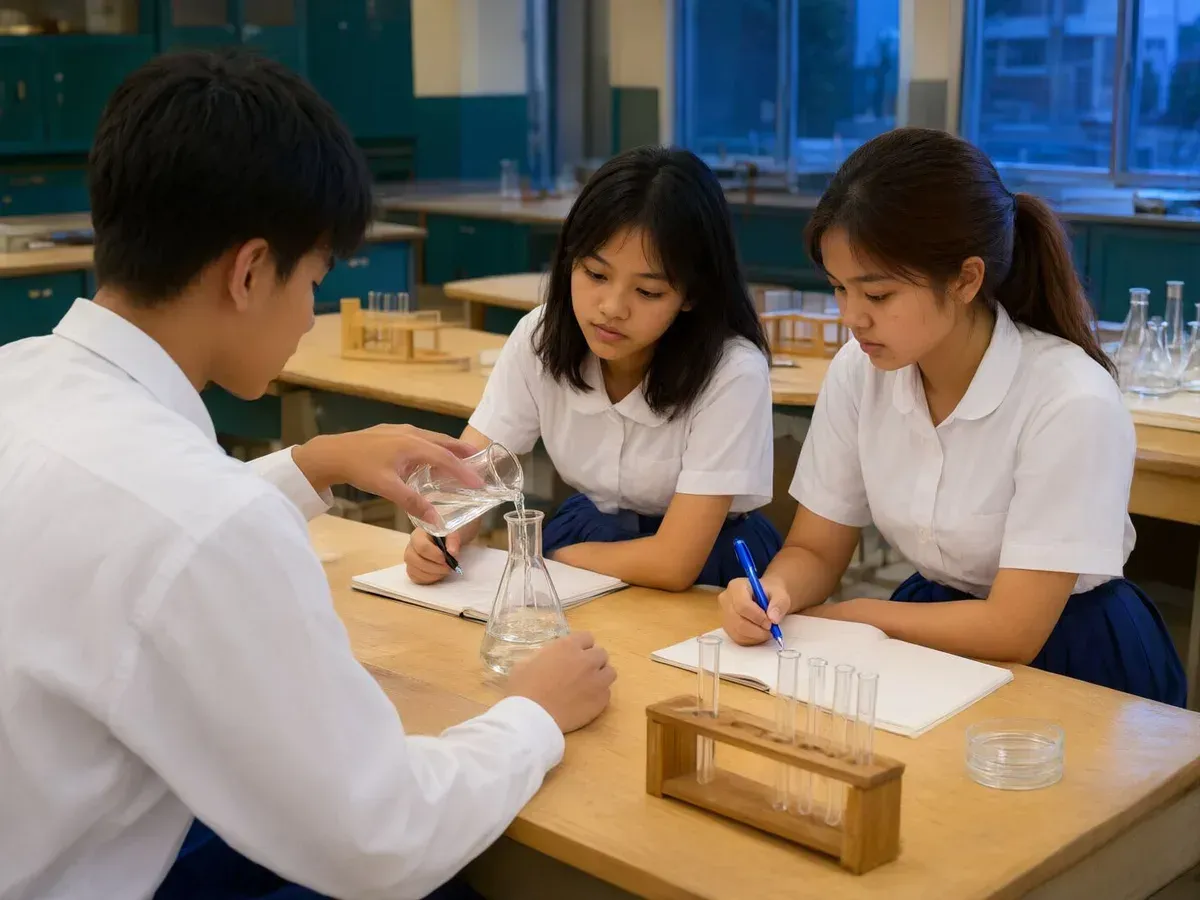
Filipino senior high school students working together in a laboratory class.

Quick answer: what's a track, and what's a strand?

A track is the big lane. A strand is the specific programme inside that lane.

  • Track = the big lane your child enters for Grades 11–12: Academic, TVL (Technical-Vocational-Livelihood), Sports, or Arts & Design.
  • Strand = the specific programme inside a lane. Academic → STEM. TVL → Home Economics. Same lane, different daily subjects.

Sports and Arts & Design are usually described as tracks with their own specialised subjects rather than being split into the same strand list — schools and DepEd documents sometimes use "track" and "strand" loosely, so always confirm the exact programme name with the school.

  1. Grade 10 — choose your strand during SHS enrollment
  2. Grade 11 — start core subjects plus your strand's specialised subjects
  3. Grade 12 — finish specialised subjects, plus work immersion or practicum

The tracks & strands map

Four lanes, one choice. Follow a branch to see what your child would actually study.

Same information, whichever way you read best.

Senior High School (Grades 11–12)

Senior High School covers Grades 11 and 12 and has four tracks. The Academic Track has four strands: STEM, ABM, HUMSS and GAS. The TVL Track has four strands: Home Economics, ICT, Industrial Arts and Agri-Fishery Arts. The Sports Track and the Arts & Design Track each run as a single specialised programme.

All tracks and strands, side by side

Read across a row to see who it suits, what your child will study, and where it commonly leads.

Swipe to see more →

TrackStrand / ProgrammeBest fit if your child…Typical specialised subjectsCommon next steps after Grade 12Schools offering it
AcademicSTEM — Science, Technology, Engineering and MathematicsLikes maths, experiments and figuring out how things workPre-Calculus and Basic Calculus; General Biology; General Physics; General Chemistry; research or capstone projectEngineering, health sciences, computing and pure science courses; laboratory and technical support workData being compiled — See STEM schools →
AcademicABM — Accountancy, Business and ManagementIs curious about money, selling, and running a businessFundamentals of Accountancy, Business and Management; Business Math; Applied Economics; Organization and Management; Principles of Marketing; business enterprise simulationAccountancy, business, management and marketing courses; bookkeeping, sales, small-business and family-enterprise workData being compiled — See ABM schools →
AcademicHUMSS — Humanities and Social SciencesReads, writes, argues well and is interested in people and societyCreative Writing and Creative Nonfiction; Introduction to World Religions and Belief Systems; Philippine Politics and Governance; Community Engagement, Solidarity and Citizenship; disciplines and ideas in the social sciencesCommunication, education, psychology, social work, political science and law-related courses; community, media, research and public-service workData being compiled — See HUMSS schools →
AcademicGAS — General Academic StrandIs still deciding, or wants a mix of subjects from different strandsApplied Economics; Organization and Management; Disaster Readiness and Risk Reduction; electives drawn from other Academic strands; research or capstone projectA wide range of courses in the humanities, social sciences, business and education; general office, community and administrative workData being compiled — See GAS schools →
TVLHome EconomicsEnjoys cooking, caring for people, or hands-on service workCookery; Bread and Pastry Production; Caregiving; Housekeeping; Beauty Care; Tourism and Dressmaking specialisations offered by the school; work immersionCulinary, hospitality, caregiving, wellness and tourism work; TESDA national certificates; hospitality and nutrition-related coursesData being compiled — See TVL schools →
TVLICT — Information and Communications TechnologyLikes computers, gadgets, coding or digital designComputer Systems Servicing; programming; animation and web or contact-centre specialisations offered by the school; work immersionIT support, web and multimedia, and service-desk work; TESDA national certificates; computing and information technology coursesData being compiled — See TVL schools →
TVLIndustrial ArtsPrefers tools, machines and building or fixing thingsAutomotive Servicing; Electrical Installation and Maintenance; Shielded Metal Arc Welding; Carpentry; Plumbing; Consumer Electronics Servicing; work immersionSkilled trades and technical work in construction, automotive, electrical and manufacturing; TESDA national certificates; engineering technology coursesData being compiled — See TVL schools →
TVLAgri-Fishery ArtsLikes plants, animals, food production or the outdoorsCrop Production; Animal Production; Organic Agriculture; Aquaculture; Food Processing; work immersionFarm, aquaculture and food-production work or agri-enterprise; TESDA national certificates; agriculture, fisheries and food-related coursesData being compiled — See TVL schools →
SportsSports Track programmeIs an athlete, or wants to coach, officiate or run fitness activitiesSafety and First Aid; Human Movement; Fundamentals of Coaching; fitness testing and basic exercise programming; practicum in coaching or officiatingCoaching, officiating, fitness and recreation work; sports science, physical education and health-related coursesData being compiled — See Sports schools →
Arts & DesignArts & Design Track programmeDraws, performs, designs, films or makes things and wants to go deeperArts appreciation and the creative industries; developing Filipino identity in the arts; apprenticeship and exploration across art forms; integrative and applied art; culminating exhibit, performance or productionCreative-industry work in design, media, performance and production; fine arts, design, music, theatre and film coursesData being compiled — See Arts & Design schools →

Academic

STEM — Science, Technology, Engineering and Mathematics

Best fit if your child…
Likes maths, experiments and figuring out how things work
Typical specialised subjects
Pre-Calculus and Basic Calculus; General Biology; General Physics; General Chemistry; research or capstone project
Common next steps after Grade 12
Engineering, health sciences, computing and pure science courses; laboratory and technical support work
Schools offering it
Data being compiled — See STEM schools →

Academic

ABM — Accountancy, Business and Management

Best fit if your child…
Is curious about money, selling, and running a business
Typical specialised subjects
Fundamentals of Accountancy, Business and Management; Business Math; Applied Economics; Organization and Management; Principles of Marketing; business enterprise simulation
Common next steps after Grade 12
Accountancy, business, management and marketing courses; bookkeeping, sales, small-business and family-enterprise work
Schools offering it
Data being compiled — See ABM schools →

Academic

HUMSS — Humanities and Social Sciences

Best fit if your child…
Reads, writes, argues well and is interested in people and society
Typical specialised subjects
Creative Writing and Creative Nonfiction; Introduction to World Religions and Belief Systems; Philippine Politics and Governance; Community Engagement, Solidarity and Citizenship; disciplines and ideas in the social sciences
Common next steps after Grade 12
Communication, education, psychology, social work, political science and law-related courses; community, media, research and public-service work
Schools offering it
Data being compiled — See HUMSS schools →

Academic

GAS — General Academic Strand

Best fit if your child…
Is still deciding, or wants a mix of subjects from different strands
Typical specialised subjects
Applied Economics; Organization and Management; Disaster Readiness and Risk Reduction; electives drawn from other Academic strands; research or capstone project
Common next steps after Grade 12
A wide range of courses in the humanities, social sciences, business and education; general office, community and administrative work
Schools offering it
Data being compiled — See GAS schools →

TVL

Home Economics

Best fit if your child…
Enjoys cooking, caring for people, or hands-on service work
Typical specialised subjects
Cookery; Bread and Pastry Production; Caregiving; Housekeeping; Beauty Care; Tourism and Dressmaking specialisations offered by the school; work immersion
Common next steps after Grade 12
Culinary, hospitality, caregiving, wellness and tourism work; TESDA national certificates; hospitality and nutrition-related courses
Schools offering it
Data being compiled — See TVL schools →

TVL

ICT — Information and Communications Technology

Best fit if your child…
Likes computers, gadgets, coding or digital design
Typical specialised subjects
Computer Systems Servicing; programming; animation and web or contact-centre specialisations offered by the school; work immersion
Common next steps after Grade 12
IT support, web and multimedia, and service-desk work; TESDA national certificates; computing and information technology courses
Schools offering it
Data being compiled — See TVL schools →

TVL

Industrial Arts

Best fit if your child…
Prefers tools, machines and building or fixing things
Typical specialised subjects
Automotive Servicing; Electrical Installation and Maintenance; Shielded Metal Arc Welding; Carpentry; Plumbing; Consumer Electronics Servicing; work immersion
Common next steps after Grade 12
Skilled trades and technical work in construction, automotive, electrical and manufacturing; TESDA national certificates; engineering technology courses
Schools offering it
Data being compiled — See TVL schools →

TVL

Agri-Fishery Arts

Best fit if your child…
Likes plants, animals, food production or the outdoors
Typical specialised subjects
Crop Production; Animal Production; Organic Agriculture; Aquaculture; Food Processing; work immersion
Common next steps after Grade 12
Farm, aquaculture and food-production work or agri-enterprise; TESDA national certificates; agriculture, fisheries and food-related courses
Schools offering it
Data being compiled — See TVL schools →

Sports

Sports Track programme

Best fit if your child…
Is an athlete, or wants to coach, officiate or run fitness activities
Typical specialised subjects
Safety and First Aid; Human Movement; Fundamentals of Coaching; fitness testing and basic exercise programming; practicum in coaching or officiating
Common next steps after Grade 12
Coaching, officiating, fitness and recreation work; sports science, physical education and health-related courses
Schools offering it
Data being compiled — See Sports schools →

Arts & Design

Arts & Design Track programme

Best fit if your child…
Draws, performs, designs, films or makes things and wants to go deeper
Typical specialised subjects
Arts appreciation and the creative industries; developing Filipino identity in the arts; apprenticeship and exploration across art forms; integrative and applied art; culminating exhibit, performance or production
Common next steps after Grade 12
Creative-industry work in design, media, performance and production; fine arts, design, music, theatre and film courses
Schools offering it
Data being compiled — See Arts & Design schools →

Subject names above are the specialisations commonly listed in DepEd SHS curriculum guides. What a school actually opens depends on its teachers, facilities and permits — confirm the exact strand and specialisation with the school before you enroll. "Data being compiled" means we are still gathering verified counts; the link takes you to the live list instead of a guess.

Academic Track: STEM, ABM, HUMSS and GAS

The Academic Track is built for students who expect to continue studying after Grade 12. All four strands share the same core subjects; the difference is the specialised subjects layered on top. Pick the strand that matches how your child likes to think — not the one that sounds most impressive at a family reunion.

Academic

STEM — Science, Technology, Engineering and Mathematics

STEM is the maths-and-science strand, for students who want the heaviest quantitative preparation.

Choose this if…

  • Your child enjoys maths and keeps asking "why does that happen?"
  • Their target course after Grade 12 sits in engineering, health sciences, computing or the natural sciences.
  • They are willing to spend extra hours on problem sets and laboratory work.

Specialised subjects you'll meet

  • Pre-Calculus and Basic Calculus
  • General Biology
  • General Physics
  • General Chemistry
  • Research or capstone project, plus applied science and technology subjects offered by the school

Skills you build: quantitative reasoning, laboratory and measurement discipline, systematic problem-solving, and writing up findings clearly.

Where graduates commonly go: engineering, health sciences, computing, mathematics and pure science courses; laboratory, technical and research-support work.

See schools offering STEM →
Academic

ABM — Accountancy, Business and Management

ABM is the business strand — money, records, selling and running an enterprise.

Choose this if…

  • Your child is curious about how businesses earn, spend and grow.
  • They may take accountancy, business, management or marketing courses later.
  • Your family runs a business and your child is likely to help run or grow it.

Specialised subjects you'll meet

  • Fundamentals of Accountancy, Business and Management
  • Business Math
  • Applied Economics
  • Organization and Management
  • Principles of Marketing
  • Business Finance and Business Enterprise Simulation, where the school offers them

Skills you build: bookkeeping and basic financial reading, planning and organising, persuasive communication, and running a small enterprise end to end.

Where graduates commonly go: accountancy, business administration, management, marketing and entrepreneurship courses; bookkeeping, sales, administrative and family-enterprise work.

See schools offering ABM →
Academic

HUMSS — Humanities and Social Sciences

HUMSS is the people-and-society strand — reading, writing, culture, governance and community.

Choose this if…

  • Your child writes, speaks or debates well and enjoys understanding people.
  • They are drawn to teaching, communication, psychology, social work, governance or law-related courses.
  • They want strong reading, research and argumentation practice before college.

Specialised subjects you'll meet

  • Creative Writing and Creative Nonfiction
  • Introduction to World Religions and Belief Systems
  • Philippine Politics and Governance
  • Community Engagement, Solidarity and Citizenship
  • Disciplines and Ideas in the Social Sciences and the Applied Social Sciences

Skills you build: close reading, structured argument, interviewing and community research, and writing for different audiences.

Where graduates commonly go: communication, education, psychology, social work, political science and law-related courses; community development, media, research and public-service work.

See schools offering HUMSS →
Academic

GAS — General Academic Strand

GAS is the flexible academic strand — a broad base plus electives, for students still deciding.

Choose this if…

  • Your child is genuinely undecided but sure they want to keep studying.
  • Their interests cross strands — some business, some social science, some science.
  • The schools near you offer a strong GAS programme but not the exact strand your child wanted.

Specialised subjects you'll meet

  • Applied Economics
  • Organization and Management
  • Disaster Readiness and Risk Reduction
  • Electives taken from other Academic strands, depending on what the school opens
  • Research or capstone project

Skills you build: broad academic grounding, research and study habits, and adaptability across subject areas.

Where graduates commonly go: a wide range of courses in the humanities, social sciences, business and education; general office, administrative and community work.

See schools offering GAS →

GAS is a real strand, not a fallback for students who "failed" to get into STEM. Ask the school which electives it actually opens — that is what makes one GAS programme different from another.

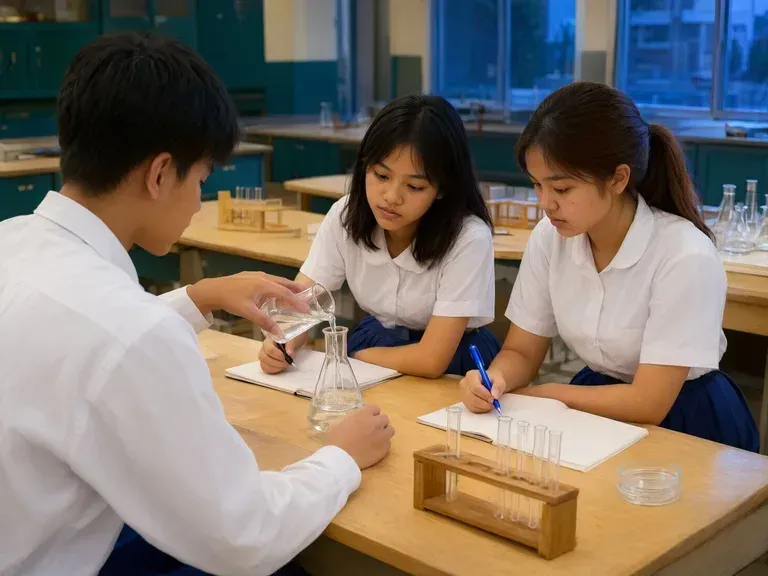
Filipino senior high school students in an Academic Track class discussion.

TVL Track: Home Economics, ICT, Industrial Arts and Agri-Fishery Arts

TVL is the hands-on track: students learn a trade, practise it in real workplaces, and can earn national skills certificates while still in Senior High School. It is not a "lesser" option — it is the fastest route to demonstrable, assessable skills, and TVL graduates may still continue to college afterwards.

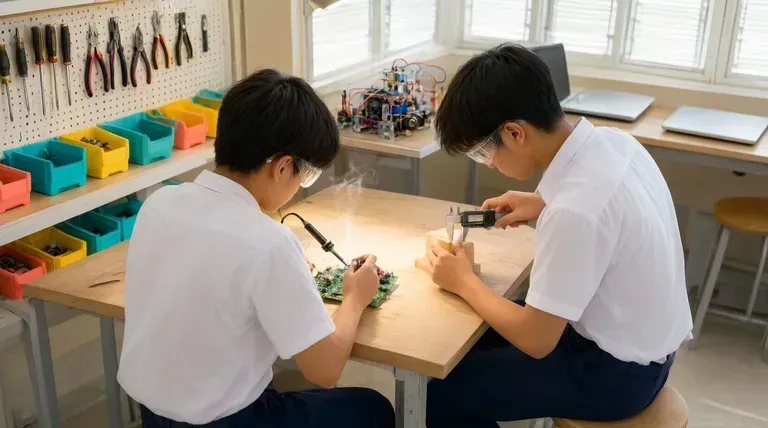
Filipino senior high school TVL students practising hands-on skills in a supervised workshop.
TVL

TVL — Home Economics

Home Economics covers food, care and service skills — the strand behind kitchens, hospitality and caregiving.

Choose this if…

  • Your child loves cooking, baking, or looking after people.
  • They want a skill they can earn from soon after Grade 12, or even during breaks.
  • They are interested in hospitality, wellness, tourism or nutrition-related courses later.

Specialised subjects you'll meet (schools open a subset)

  • Cookery
  • Bread and Pastry Production
  • Caregiving
  • Housekeeping and Beauty Care
  • Tourism, Dressmaking or Handicraft specialisations
  • Work immersion in a kitchen, hotel, care or service setting

Skills you build: food preparation and safety, service standards, hygiene and care routines, customer handling.

Where graduates commonly go: culinary, hospitality, caregiving, wellness and tourism work; TESDA national certificates such as Cookery or Bread and Pastry Production; hospitality and nutrition-related courses.

See schools offering TVL →
TVL

TVL — ICT (Information and Communications Technology)

ICT is the computer-and-digital strand — units, networks, code and digital production.

Choose this if…

  • Your child is the one the family calls when the laptop or Wi-Fi breaks.
  • They enjoy coding, editing, animation or building things on screen.
  • They want a technical credential alongside a possible computing course later.

Specialised subjects you'll meet (schools open a subset)

  • Computer Systems Servicing
  • Programming
  • Animation and multimedia or web development specialisations
  • Contact Centre Services, where offered
  • Work immersion in an IT support, service or digital production setting

Skills you build: unit assembly and troubleshooting, network basics, structured logic, digital production discipline.

Where graduates commonly go: IT support, web and multimedia, and service-desk work; TESDA national certificates such as Computer Systems Servicing; computing and information technology courses.

See schools offering TVL →
TVL

TVL — Industrial Arts

Industrial Arts is the tools-and-machines strand — building, wiring, welding and repairing.

Choose this if…

  • Your child would rather make and fix than sit and read.
  • They are interested in construction, automotive, electrical or manufacturing work.
  • They want a trade certificate that employers can verify.

Specialised subjects you'll meet (schools open a subset)

  • Automotive Servicing
  • Electrical Installation and Maintenance
  • Shielded Metal Arc Welding
  • Carpentry and Plumbing
  • Consumer Electronics Servicing
  • Work immersion in a shop, site or plant

Skills you build: safe tool and machine handling, reading technical plans, measurement accuracy, shop safety habits.

Where graduates commonly go: skilled trades and technical work in construction, automotive, electrical and manufacturing; TESDA national certificates; engineering technology courses.

See schools offering TVL →
TVL

TVL — Agri-Fishery Arts

Agri-Fishery Arts is the food-production strand — crops, animals, aquaculture and processing.

Choose this if…

  • Your child likes working with plants, animals or the outdoors.
  • Your family has land, a farm, a fishpond or a food business to grow.
  • They are interested in agriculture, fisheries or food-related courses later.

Specialised subjects you'll meet (schools open a subset)

  • Crop Production
  • Animal Production
  • Organic Agriculture
  • Aquaculture
  • Food Processing
  • Work immersion on a farm, hatchery, pond or processing facility

Skills you build: production planning, animal and plant care, post-harvest handling, basic farm-enterprise record-keeping.

Where graduates commonly go: farm, aquaculture and food-production work or agri-enterprise; TESDA national certificates; agriculture, fisheries and food-related courses.

See schools offering TVL →

TVL strands are the widest umbrella in SHS — what matters is the specialisation the school actually runs, and whether it has the equipment and assessment arrangements for it. Ask two questions: "Which specialisation do you open?" and "Do your students take TESDA assessment for it?"

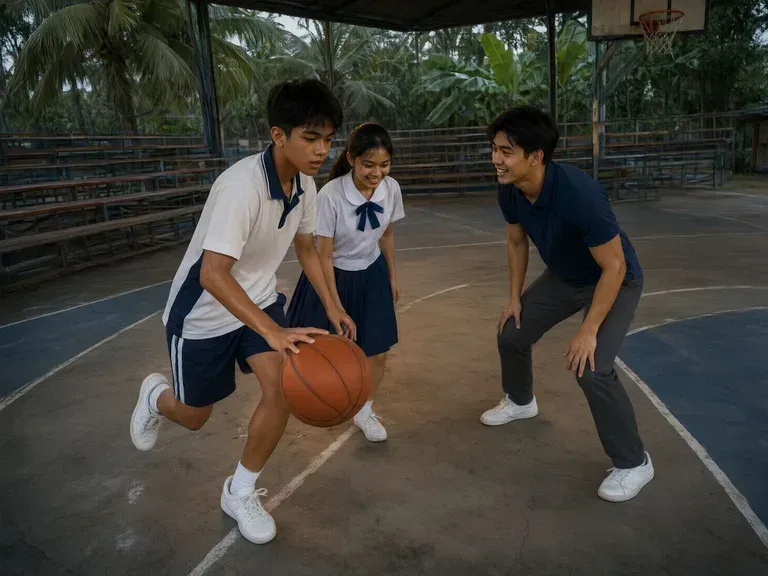
Filipino senior high school Sports Track students training on a school court with a coach.

Sports Track

The Sports Track is for students who want to work in sport — as coaches, officials, fitness guides or recreation organisers — not only as competitors. Being a school athlete helps, but the programme is about learning to teach, lead, officiate and keep people safe in physical activity.

Choose this if…

  • Your child plays a sport seriously and wants to stay in it long after competing.
  • They enjoy leading warm-ups, training younger players, or organising games.
  • They are interested in sports science, physical education or health-related courses later.

Specialised subjects you'll meet

  • Safety and First Aid
  • Human Movement
  • Fundamentals of Coaching
  • Fitness testing and basic exercise programming
  • Practicum in coaching, officiating or sports event work

Skills you build: session planning and instruction, basic injury prevention and first response, fair and consistent officiating, teamwork and event organisation.

Where graduates commonly go: coaching, officiating, fitness and recreation work; sports science, physical education and health-related courses.

See schools offering the Sports Track

Sports Track offerings depend heavily on facilities and qualified staff. Ask which sports the school actually supports and where practicum happens.

Arts & Design Track

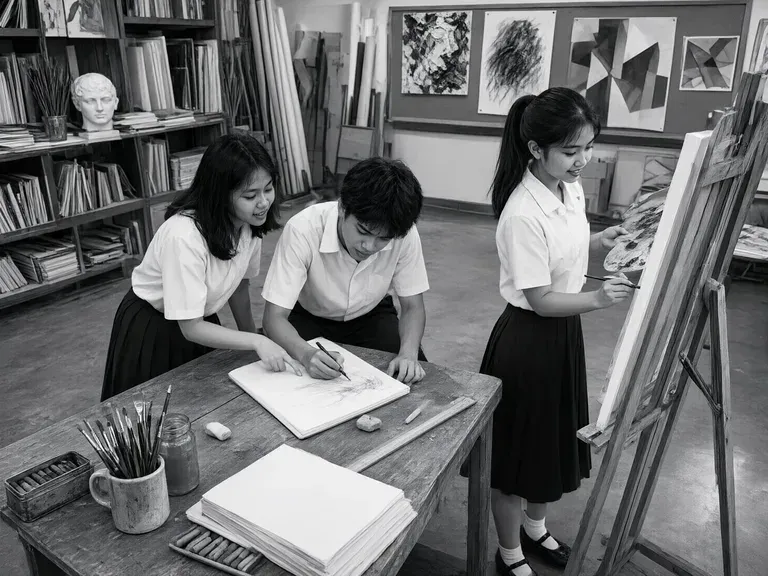
The Arts & Design Track is a structured creative programme: students study art forms, build a body of work, and finish with an exhibit, performance or production. It suits students who already make things — and want the discipline, critique and industry exposure that come with doing it seriously.

Choose this if…

  • Your child draws, performs, writes, designs, films or crafts and wants to go deeper.
  • They are willing to be critiqued, revise, and meet production deadlines.
  • They are aiming at fine arts, design, music, theatre, film or other creative courses — or creative-industry work.

Specialised subjects you'll meet

  • Arts appreciation and the creative industries
  • Developing Filipino identity in the arts
  • Apprenticeship and exploration across different art forms
  • Integrative art applied to contemporary art forms
  • Physical and personal development for artists, plus a culminating exhibit, performance or production

Skills you build: craft technique in a chosen art form, concept development, critique and revision, and staging or presenting work to an audience.

Where graduates commonly go: creative-industry work in design, media, performance and production; fine arts, design, music, theatre and film courses.

See schools offering Arts & Design

Ask what art forms the school can actually teach, what materials or studio space students use, and how the culminating output is staged. A portfolio built here is useful for auditions and applications later.

Filipino senior high school Arts and Design students working on a creative project in a studio.

Strengthened SHS Curriculum, starting SY 2025–26

DepEd is rolling out a Strengthened Senior High School Curriculum beginning SY 2025–26. The tracks and strands in this guide are still the map you choose from — what is being strengthened is how SHS is delivered, with a sharper focus on job-ready skills, meaningful work immersion, and graduates who are ready for work, enterprise or further study. Because this is a rollout, the details a family meets can differ by school and by year level. Confirm the current programme with the school you are applying to, and check DepEd's official issuance for the year your child will enter.

What this means for your family

  1. Still choose a track and strand. The choice that shapes your child's specialised subjects has not gone away. Use this guide to shortlist two or three.
  2. Ask about work immersion, specifically. Where students go, how they are supervised, and whether the placement matches the strand matters more than ever. "May work immersion po ba sa strand na ito, at saan?" is a fair question to ask a school.
  3. Ask which curriculum the school is implementing for your child's year level. During a rollout, Grade 11 and Grade 12 may not be on identical plans in the same school. Get the answer in writing from the school, not from a group chat.

Details we are still verifying

  • Number of subjects and hours in the strengthened SHS programme: Data being compiled
  • Work immersion hours required per strand: Data being compiled
  • Number of schools implementing the strengthened curriculum nationwide: Data being compiled

We publish verified figures only. Until then, treat any number circulating online as unconfirmed and ask the school or DepEd directly.

Before you enroll — verification checklist

  • Confirm the exact strand and, for TVL, the exact specialisation the school opens for SY 2025–26.
  • Ask for the subject list for Grade 11 and Grade 12 in that strand.
  • Ask how work immersion or practicum is arranged, and who supervises it.
  • For TVL, ask whether students are prepared and endorsed for TESDA assessment.
  • Check that the school is DepEd-recognised and that the SHS level is listed for that school.

Which schools offer which strand?

Not every SHS school offers every strand — the only reliable answer comes from the school itself, cross-checked against its DepEd records. A school may be recognised for Senior High School and still open only two or three strands, because each one needs qualified teachers and the right facilities.

How to check, in four steps

  1. Start with the directory. Filter by Senior High School and a track, then narrow by region, province, city or municipality, and barangay. Browse SHS schools or start from the area hubs.
  2. Read the school's listing. Check the DepEd School ID, the levels offered, the SHS tracks listed, the website link and the map pin. Ratings, when shown, are labelled with their source and date — for example: Google rating 4.6 ★ (Google Maps, as of Nov 2026).
  3. Confirm the strand with the school. Use the school's own website or visit. Ask for the exact strand name, the specialisation for TVL, and the subject list for SY 2025–26. Public program lists can lag behind what a school has just opened or closed.
  4. Cross-check recognition. Make sure the school is DepEd-recognised for Senior High School. Our guide walks you through it: How to check if a school is DepEd-recognised.

Jump to schools by track

Jargon, explained on first use

LIS
Learner Information System, DepEd's record system for individual learners. Your child's LIS records follow them through K-12, so make sure names and details are correct at enrollment.
BEIS
Basic Education Information System, DepEd's system for school-level information such as recognised levels and offerings.
PEAC
Private Education Assistance Committee, the body that helps administer government assistance to private basic education, including ESC and the SHS Voucher Program.

Fees, ESC and the SHS Voucher

Senior High School in a public (DepEd) school has no tuition fee. Families who choose a private or non-DepEd SHS may be able to use government assistance — the SHS Voucher Program — to reduce what they pay. Assistance is applied for and processed through the receiving school, so ask the school early, not after enrollment.

Public SHS

No tuition in DepEd public senior high schools. Families still budget for uniforms, materials, projects, transport and daily allowance. Ask the school for its list of expected costs so there are no surprises in the first month.

SHS Voucher Program

Government assistance for Grade 10 completers who continue Senior High School in a non-DepEd school — private schools, and other schools recognised to offer SHS outside DepEd. It is a subsidy applied to the school bill, not cash handed to the family, and the amount depends on the school's location category and other program rules. PEAC (Private Education Assistance Committee) helps administer it, and the receiving school handles the application steps.

  • Voucher amount for your school's location category: Data being compiled
  • What the voucher covers versus what you still pay: confirm with the school in writing.

ESC — Educational Service Contracting

ESC is government assistance for Junior High School students studying in participating private schools. It matters here because a Grade 10 student's ESC status can affect the paperwork for moving into private SHS. If your child is currently in a private Junior High School, ask whether the school participates in ESC and how your child's records will be endorsed for SHS.

Typical private SHS tuition range: Data being compiled — we do not publish estimated fees. Ask each school for its current schedule of fees for SY 2025–26.

How to choose a strand with your child

Start from your child's strengths and daily interests, work backwards from the course or work they might want after Grade 12, then check which of those strands the schools near you actually offer. In that order — interests first, logistics second, barkada last.

  1. 1. Name what your child already enjoys doing. Look at what they choose when nobody is watching: fixing gadgets, cooking, arguing about issues, drawing, coaching younger kids. Interests that survive a bad week are better evidence than a one-off high grade.
  2. 2. Work backwards from a direction, not a job title. "Something with machines and maths" points to STEM or Industrial Arts. "Something with people and community" points to HUMSS or Home Economics caregiving. Your child does not need a career decided at 15 — they need a direction. Our sibling guide helps here: Choosing an SHS track for a target college course.
  3. 3. Check the schools you can realistically reach. List the SHS schools within a commute your family can sustain daily, then check which strands each one opens. A perfect strand two hours away is a worse plan than a good strand nearby. Browse SHS schools or start from your region hub.
  4. 4. Ask the school three questions. Which strand and specialisation do you open for SY 2025–26? What does the Grade 11–12 subject list look like? Where do students go for work immersion or practicum? Write down the answers — you will compare them later.
  5. 5. Shortlist two or three strands, then compare schools. Name your top choices out loud with your child, and note one reason for each. Then compare up to 3 schools side by side on the things that decide daily life: strand offered, commute, fees after assistance, and immersion arrangements.

Fill this in together: "Our candidate strands are ______, ______ and ______, because ______."

The quiz asks a few questions about your child and your area, then suggests schools to look at. Free, no sign-up needed. Compare up to 3 schools on the Compare Schools page.

Mistakes to avoid

1. Choosing the strand your child's friends chose.

The fix: decide the strand first, then find out who else is taking it. Friends shift; the subject load does not.

2. Treating TVL as the option for "weak" students.

The fix: TVL is a skills track with assessment and real workplace practice. Plenty of TVL graduates continue studying afterwards. Judge it by the specialisation and facilities, not by reputation.

3. Assuming a school offers every strand.

The fix: confirm the exact strand and specialisation with the school for SY 2025–26, and check that SHS is a recognised level there. How to check DepEd recognition.

4. Believing a strand locks your child out of a course forever.

The fix: a strand shapes preparation, not permission. A mismatch usually means catching up on subjects, not a closed door. Plan it with the school and read Choosing an SHS track for a target college course.

5. Budgeting only for tuition.

The fix: add uniforms, materials, projects, transport, allowance, immersion costs and any assessment fees. Ask for the full schedule of fees, and what remains after assistance is applied.

6. Enrolling first and asking about the voucher later.

The fix: ask about SHS Voucher participation and deadlines before you commit, and get the requirements in writing. ESC and SHS Voucher guide.

Frequently asked questions

What is the difference between a track and a strand?

A track is the big lane — Academic, TVL, Sports or Arts & Design. A strand is the specific programme inside a lane, such as STEM under Academic or Home Economics under TVL. Sports and Arts & Design are usually described as tracks with their own specialised subjects, and schools sometimes use the two words loosely, so confirm the exact programme name with the school.

Is TVL only for students who will not continue studying after Grade 12?

No. TVL builds assessed, job-ready skills, and graduates may go on to work, run an enterprise, or continue to college. Many families choose it precisely because it gives their child a credential and a fallback while keeping further study open.

Will the strand limit the course my child can take later?

A strand shapes preparation, not permission. A student who took HUMSS and later wants a science-heavy course will usually need to catch up on subjects, not start over. Plan the direction early with the school and read our guide to choosing an SHS track for a target college course.

Can my child change strand after Grade 11 starts?

Schools handle this differently, and specialised subjects begin in Grade 11, so a late change can mean catching up. Ask the school about its process before you enroll, and raise any doubt early rather than after classes start.

Is Senior High School free?

In DepEd public senior high schools there is no tuition fee. Families still budget for uniforms, materials, projects, transport and allowance. In private or non-DepEd SHS, ask about the SHS Voucher Program and what balance remains after it is applied.

Do private SHS students automatically get the voucher?

Do not assume so. Assistance is processed through the receiving school with PEAC (Private Education Assistance Committee), and requirements and deadlines apply. Ask the school whether it participates for SY 2025–26, what documents it needs, and when. See our ESC and SHS Voucher guide.

What is NC II, and does my child get it automatically?

NC II means National Certificate Level II, issued by TESDA (Technical Education and Skills Development Authority) after passing a competency assessment for a specific skill. It is not automatic with the SHS diploma. Ask the school whether it prepares and endorses students for assessment in their specialisation.

What changed with the Strengthened SHS Curriculum this SY 2025–26?

DepEd is strengthening how SHS is delivered, with a sharper focus on job-ready skills and meaningful work immersion. Tracks and strands remain the choice families make. Because it is a rollout, ask the school which programme it is implementing for your child's year level and check DepEd's official issuance. We publish verified figures only — subject counts and immersion hours are still marked "Data being compiled" here.

How do I find out which strands the school near us offers?

Filter the directory by Senior High School and a track, narrow to your city or municipality, then confirm the exact strand and specialisation with the school using its website or a visit. Start here: SHS schools or area hubs. If a listing is out of date, the school can claim and correct it.

Sources and how we verify

This guide is written from public Philippine basic education sources and the public data behind our directory. We do not publish figures we cannot verify — where a number is missing, you will see "Data being compiled" instead of an estimate.

Sources used

  • DepEd school masterlist — DepEd School ID and levels offered, including Senior High School.
  • DepEd Basic Education Information System (BEIS) — school-level information on recognised offerings.
  • DepEd K to 12 Senior High School curriculum guides — track and strand structure and specialised subjects.
  • DepEd issuances on the Strengthened SHS Curriculum, beginning SY 2025–26.
  • PEAC (Private Education Assistance Committee) public information on ESC and the SHS Voucher Program.
  • TESDA public information on national certificates and competency assessment.
  • Public Google Maps business listings — website, map pin and rating, labelled with source and date: Google Maps, as of Nov 2026.

For the latest official wording, check the official DepEd, PEAC and TESDA websites directly, and confirm programme details with the school. Curricula and program rules can change between school years.

We combine official school records with public listings and public program lists. School owners can claim and correct their own entries. We do not publish school phone numbers or emails, and no payment changes a school's position in search results.

Get the next SHS update first

One short email when SHS curriculum details, voucher rules or strand listings change — written for parents, not for search engines. Walang bayad ang guide na ito, at ang newsletter din.

Browse SHS schools by track →

We send SHS and school-listing updates. Unsubscribe anytime.

We use your email to send the updates you asked for, and nothing else. We do not sell it. Read our Privacy Policy page for the plain-language details.